
What Is Bronze & Why Does It Matter?

You've eaten from steel your whole life. Your grandparents ate from bronze.
Guess who had better digestion?
Kansa, India's ancient bronze, isn't a wellness trend. It's a 5,000-year-old science that got buried under plastic plates and stainless steel thalis. And right now, people are rediscovering it, not out of nostalgia, but because it genuinely works.
This guide is for anyone who's ever seen a Kansa bowl and wondered "is this actually worth it?”, and wants a straight, honest answer.
No jargon. No fluff. Just everything you need to know about the metal that might be the single best upgrade you can make to your daily routine.
Let's get into it.
So, What Is Bronze?
If you haven’t thought about bronze since a school history lesson, you’re not alone. But here’s the thing, this isn’t just “old metal”. It might be the most useful metal in your kitchen right now, and you don’t even know it.
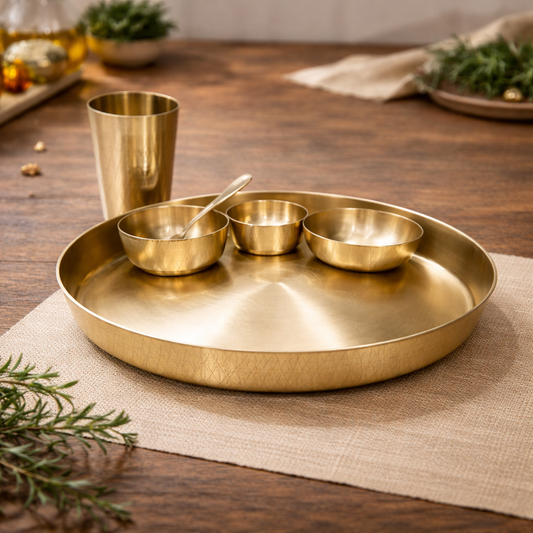
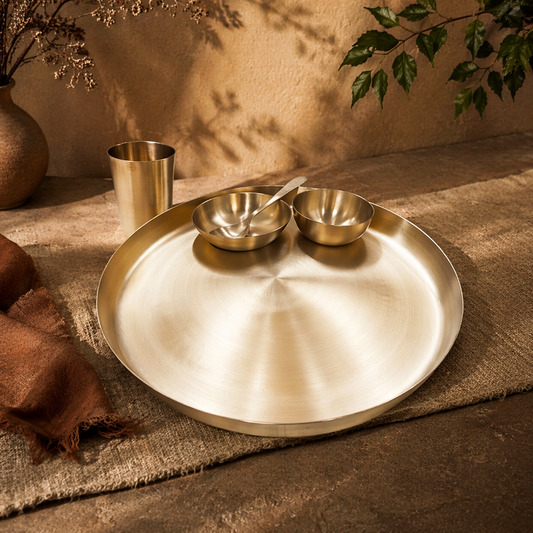
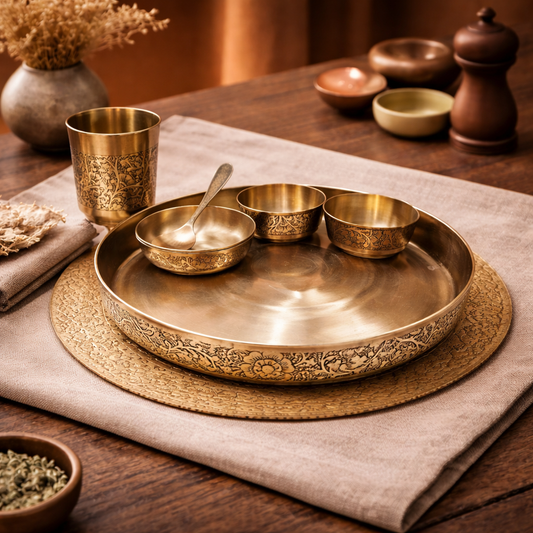
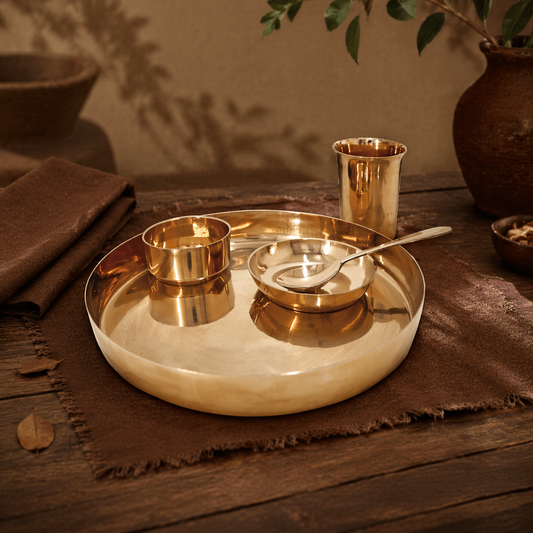
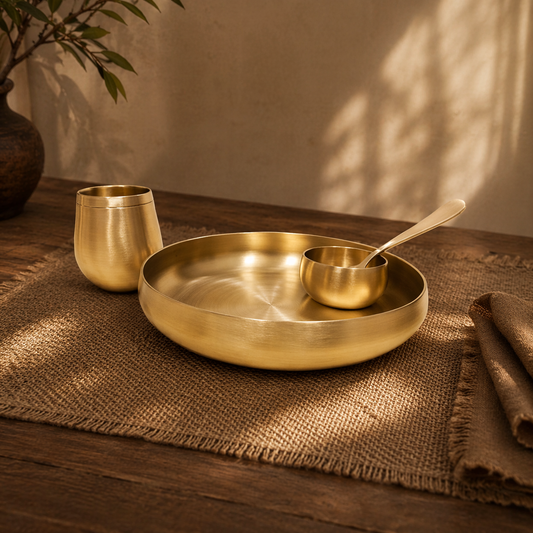
Bronze, known in India as KANSA, is an alloy, a carefully measured marriage of two metals: Copper (about 78%) and Tin (about 22%). That specific ration isn’t accidental. It has been perfected over thousands of years of use across India, Egyptian, Greek, and Chinese civilisations. Humans didn’t stumble onto bronze, they engineered it.
What makes this alloy so special is that it’s more than the sum of its parts. Pure copper is soft and reactive, Pure tin is brittle. But together? They create a metal that is hard. Naturally antimicrobial, thermally stable, and crucially, completely food-safe.
"Kansa is the only metal mentioned in Ayurveda as ideal for preparing, serving, and eating food. It's not tradition for tradition's sake, it's ancient science."
In India, Kansa has been used continuously for over 5,000+ years. Your great-grandmother ate in Kansa (bronze) thali. Her mother cooked in a Kansa vessel. The knowledge was always there, we just got distracted by plastic and stainless steel for a few decades. Now, we're coming back.
Health Benefits That'll Make You Rethink Your Kitchen
Let's be direct, people buy Kansa products for three reasons: tradition, beauty, and health. But the health benefits aren't just anecdotal. They're rooted in both Ayurvedic wisdom and modern research.
1. Naturally Antimicrobial
Bronze's copper content makes it hostile to bacteria, fungi, and certain viruses. Water stored in a Kansa (bronze) vessel for 8+ hours is naturally purified, no filter required.
2.Balances the Three Doshas
Ayurveda teaches that Kansa (bronze) balances Vata, Pitta, and Kapha, the three energies governing digestion, metabolism, and immunity.
3.Supports Brain Health
Trace amounts of copper and tin that naturally leach into food from Kansa (bronze) are linked to improved cognitive function and neurological health.
4.Boosts Immunity
Regular use of Kansa (bronze) cookware and drinkware introduces micro-minerals that fortify the immune system over time, a slow, gentle supplement from your meals.
5.Aids Iron Absorption
Copper in Kansa helps the body absorb iron more efficiently, making it especially beneficial for those managing anemia or fatigue.
6.Improves Digestion
Eating from a Kansa plate is said to stimulate digestive enzymes and reduce acidity. Many users report less bloating and better gut health within weeks.
The keyword here is consistent use. Kansa isn't a magic pill; it's a daily practice. Replace one plastic or steel item in your kitchen with a Kansa alternative, and you'll start to feel the difference over weeks and months.

Why Eat & Cook in Bronze, Not Just a Pretty Choice
Here's something nobody tells you about stainless steel: it's inert. It does nothing for your food except hold it. Kansa, on the other hand, is an active participant in your meal.
When you eat from a Kansa thali or drink water from a Kansa glass, tiny, safe amounts of copper and tin are transferred to your food. These micro-minerals are bioavailable, meaning your body absorbs them easily and uses them immediately. This is called the oligodynamic effect, and it's been studied extensively.
Kansa also has natural alkalising properties. Most of our modern diets are acidic, packed with processed foods, caffeine, and refined sugar. Eating from Kansa gradually neutralises some of that acidity. Think of it as a gentle, passive correction happening three times a day, at every meal.
The bottom line: stainless steel keeps your food in a vessel. Kansa keeps your food alive. There's a difference, and once you feel it, you won't want to go back.
Bronze for Your Skin? Yes, Really.
This is the part most people don't know. Kansa (bronze) isn't just for your dining table; it's one of the oldest skincare tools in Ayurvedic tradition. And beauty editors worldwide are finally catching on.
The Kansa massager, a small, dome-shaped bronze tool, has been used in Ayurvedic facial massage for centuries. When gently massaged over oiled skin, bronze generates a mild electromagnetic charge that works at the fascia (connective tissue) level, drawing out heat and acidity, and encouraging cellular relaxation.
For the Face
Regular Kansa wand massage reduces puffiness, improves circulation, stimulates lymphatic drainage, and gives skin a natural glow. Practitioners report a reduction in fine lines, dark circles, and jaw tension with consistent use.
For the Body
Used on feet and legs, Kansa tools draw out excess heat from the body, a practice called "grounding" in Ayurveda. Particularly effective for people with Pitta imbalances, stress, or inflammation.
The copper in Kansa is also known to stimulate collagen production, the protein responsible for skin elasticity and firmness. This is why many Ayurvedic texts describe Kansa as a metal that "supports the skin from within and without."
"You don't need a ten-step routine. Sometimes, the most powerful skincare tool is a 5,000-year-old piece of bronze."
Kansa vs. Copper - They're Not the Same Thing
People often confuse Kansa with pure copper products. They look similar. They both have health benefits. But they're meaningfully different, and for most everyday uses, Kansa actually wins.
|
Property |
Kansa (Bronze) |
Pure Copper |
|
Composition |
78% copper + 22% tin |
99%+ copper |
|
Reactivity with food |
Low - stable with most foods |
Higher - reacts with foods |
|
Antimicrobial action |
Strong (via copper content) |
Very strong |
|
Durability |
Harder, longer lasting |
Softer, dents very easily |
|
Ayurvedic rating |
Highest - balances all 3 doshas |
Beneficial for Pitta imbalances |
|
Skin use |
Kansa wands - widely recommended |
Less common in facial tools |
|
Everyday use |
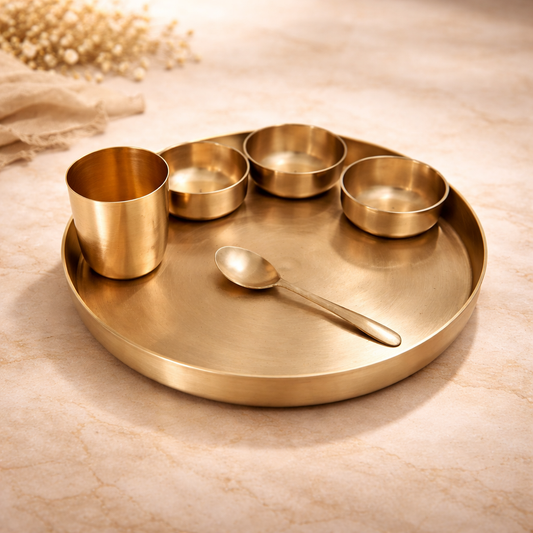
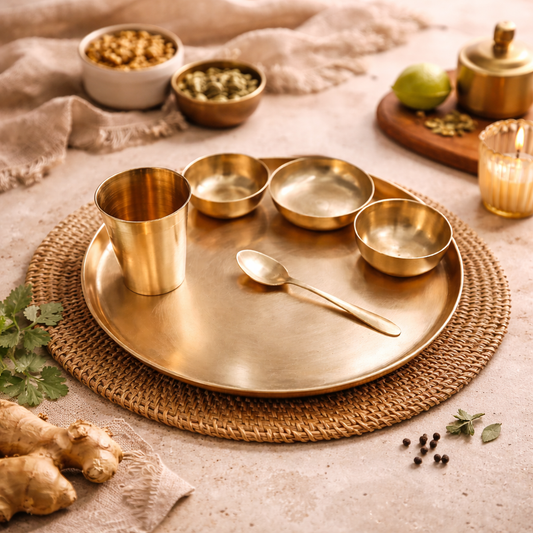
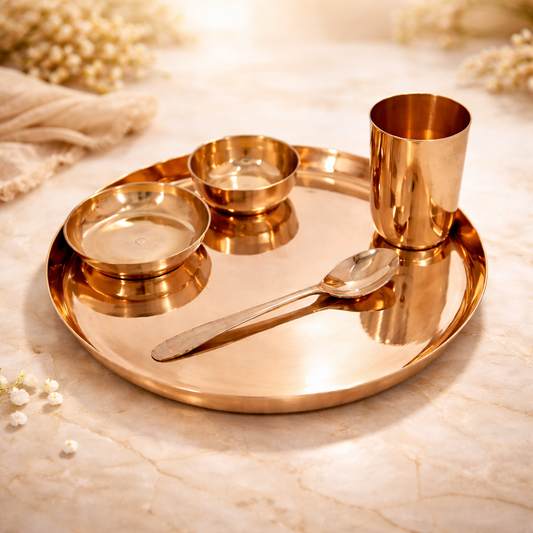
Full-meal thalis, glasses, bowls |
Mainly water bottles & storage |
In short: copper is excellent for water storage. But for a complete, everyday lifestyle upgrade, eating, drinking, cooking, skincare, Kansa is the more versatile, safer, and richer-in-tradition choice.
Why Kkansyam Is the Only Name You Need
When you buy Kansa, the brand matters enormously. The purity of the alloy, the quality of the craft, and the consistency of every piece, these aren't details, they're everything. That's where we come in.
In-House
We manufacture everything ourselves, no middlemen, no outsourcing.
Pure Alloy
Every piece is the correct 78:22 copper-tin ratio. No fillers.
30+ Years
Three decades of specialised bronze craft. Not a trend, a vocation.
Sustainable
Bronze lasts lifetimes. One Kansa piece replaces hundreds of disposable ones.
We started Kkansyam with one conviction: that India's most ancient metal working tradition deserved to be preserved with absolute integrity. Over 30 years later, every piece that leaves our workshop is a direct continuation of that promise, crafted with the same fire, the same alloy, the same care.
Frequently Asked Questions
Is it safe to eat acidic foods from a Kansa plate?
Acidic foods, whether mild or more intense, can be safely served in Kkansyam’s Kansa (bronze). For everyday use, Kansa is completely safe and continues to offer its natural benefits.
Can I use Kansa for hot food and liquids?
Absolutely. Kkansyam’s kansa (bronze) products handle heat beautifully and distribute it evenly. Warm meals and hot teas can be served without any concern. In fact, drinking warm water from a Kansa (bronze) glass first thing in the morning is one of Ayurveda's most recommended daily rituals
How do I clean and maintain Kansa?
Wash with warm water and a mild soap. For a natural shine, use a paste of tamarind (imli) or lemon with salt, rub gently, rinse, and dry immediately. Kkansyam’s Kansa is dishwasher-friendly and retains all its natural goodness. With simple care, your piece will last for generations.
What should I start with, Kansa (bronze) thali, glass, or bowl?
The most popular starting point is a Kansa glass; it's the easiest swap, and the health benefits begin immediately. A Kansa thali is the next step if you want the full mealtime experience. Kkansyam offers both individually and as curated sets.