
Pure Kansa, Zero Zinc: Know the Difference

If you've been shopping for traditional Indian tableware and wondering why some bronze looks different from the rest, or why certain "kansa" pieces cost considerably less than others, the answer often lies in one hidden ingredient: zinc.
The Ancient Alloy with a Modern Problem
Bronze has been cherished in Indian homes for thousands of years. From temple offerings to everyday meals, pure kansa utensils made their mark as vessels of healing, taste, and tradition. But today's market is flooded with alloys that wear the name "bronze" while quietly carrying a composition that ancient metallurgists, and modern scientists, would both question.
The culprit? Zinc.
What Is True Bronze, and Why Does the Composition Matter?
Traditional bronze, the kind used in authentic traditional Indian tableware, is an alloy of copper (Cu) and tin (Sn). The classic ratio hovers around 78% copper and 22% tin, a combination that gives kansa (bronze) its signature golden tone, subtle resonance, and well-documented health properties rooted in Ayurveda.
Zinc changes everything.
When zinc is introduced into the bronze matrix, the resulting alloy behaves differently at a chemical, structural, and biological level. What you get is technically closer to brass than bronze, but it is often sold under the same name, at lower cost, without disclosure to the buyer.
Why Is Zinc Not Good in Bronze? The Science Explained
It Alters the Alloy's Fundamental Nature
Copper-tin bronze has a specific crystalline grain structure. Adding zinc disrupts this lattice, weakening the alloy's resistance to corrosion over time. In the context of pure kansa utensils meant to last generations, this is a significant downgrade, and one you won't see advertised on the product label.
It Changes How the Metal Interacts with Food
When acidic or warm foods are served in zinc-laced bronze, zinc can leach into the food in amounts that go beyond safe trace levels. This is not the gentle mineral exchange that Ayurveda endorses through the documented benefits of bronze utensils, it is an uncontrolled reaction with real health implications.
High zinc intake from regular dietary exposure is linked to nausea, copper absorption disruption, and long-term immune concerns, the opposite of what traditional Indian tableware was designed to deliver.
It Makes RoHS Compliance Harder to Achieve
The RoHS certified (Restriction of Hazardous Substances) standard, a globally recognised benchmark, requires strict controls on heavy metals and hazardous materials in manufactured goods. A zinc-heavy bronze alloy is harder to certify under RoHS certified frameworks because zinc can interact with other trace metals in the melt, sometimes amplifying lead or cadmium contamination in the final casting.
It Undermines the Lead-Free Promise
Serious manufacturers who offer lead free kansa (bronze) products must work hard to keep their alloy compositions tightly controlled. When zinc is added, often to reduce cost or improve castability, it introduces a new vector for trace lead contamination during smelting. This is precisely why lead free kansa (bronze) certification is closely tied to alloy purity: you cannot guarantee lead-free status without controlling every element in the mix.
The Economic Shortcut That Costs You More
Zinc is significantly cheaper than tin. Substituting tin with zinc in a bronze alloy can cut material costs by 30-50%. This is the commercial incentive driving many low-cost "bronze" products across the market today.
For the buyer, the initial price looks attractive. But the genuine benefits of bronze utensils, from improved digestion and water alkalising to natural antimicrobial surface action, depend on the specific electrochemical behaviour of copper-tin. Replace tin with zinc, and you lose the very mechanism that made your grandmother's kansa thali worth eating from every day.
How to Spot Zinc-Contaminated Bronze Before You Buy
The Sound Test
Authentic pure kansa utensils ring with a long, clear tone when gently struck. Zinc-heavy alloys tend to produce a flat, dull sound, the crystalline structure responsible for resonance is compromised by the zinc addition.
The Colour Clue
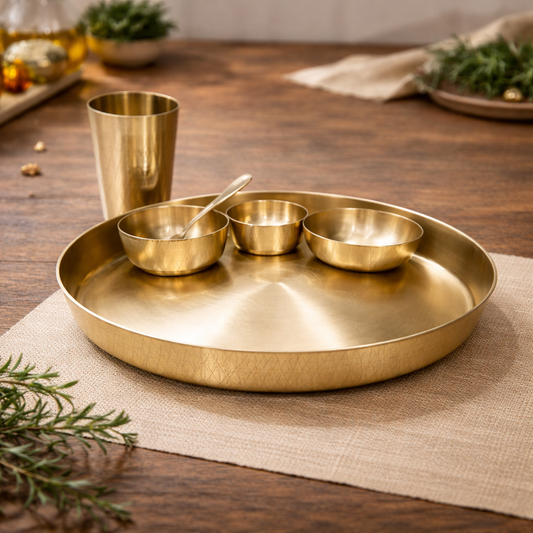
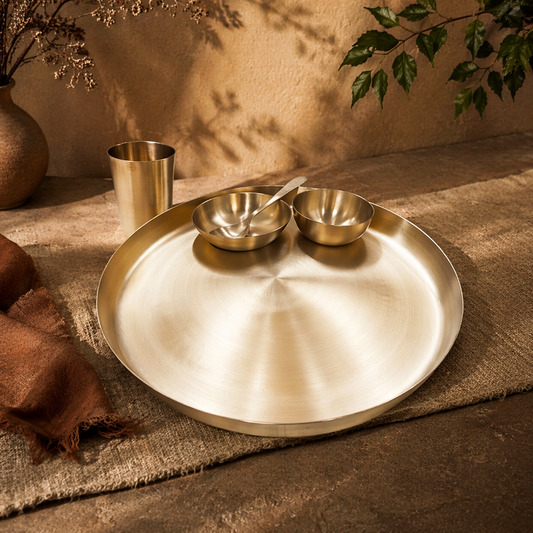
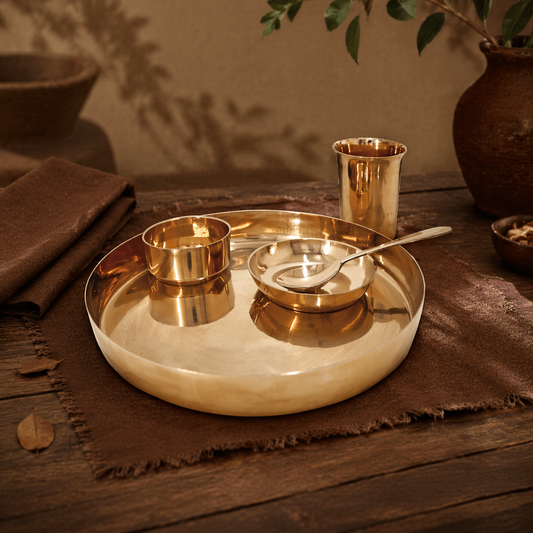
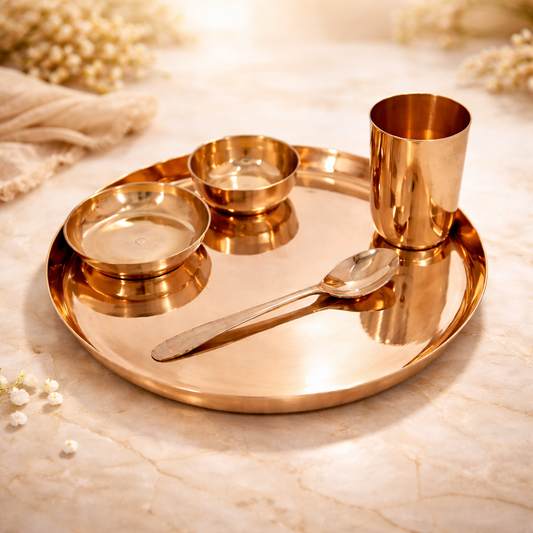
Genuine traditional Indian tableware made of true bronze carries a warm, slightly reddish gold. Zinc-laced bronze looks more yellow, closer to brass, because zinc shifts the copper's visual appearance significantly.
The Weight Check
Traditional Kansa often feels heavy and bulky, making daily use difficult. But Kansyam’s real Kansa is crafted to be lightweight without compromising on authenticity, giving you the perfect balance of tradition, comfort, and elegance for everyday living.
Ask for Certification
Always look for RoHS certified labelling and an explicit lead free kansa declaration from the manufacturer. Reputable brands will provide alloy composition documentation on request without hesitation.
What Kanysam Does Differently
At Kanysam, every piece is made with a strict copper-tin formulation, no zinc shortcuts, no compromises. Our pure kansa utensils are independently tested, RoHS certified, and hold a certified lead free kansa guarantee, because we believe the documented benefits of bronze utensils should be real and verifiable, not just marketing language printed on a box.
Traditional Indian tableware is a living wellness tradition. It deserves a manufacturing standard that honours that heritage completely.
Frequently Asked Questions
Q1. Is all bronze made with zinc?
No. True kansa is copper + tin only. Cheaper products swap tin for zinc to cut costs, changing both safety and performance.
Q2. How do I know if my kansa is lead free?
Look for an explicit lead free kansa certificate, not a generic "safe" label. Kanysam backs every piece with alloy documentation and full RoHS certified status.
Q3. Does zinc affect taste?
Yes, it introduces a metallic edge, especially with warm or acidic foods. Genuine pure kansa utensils subtly enhance flavour instead.
Q4. What are the real benefits of bronze utensils?
Correct copper-tin kansa naturally alkalises water, fights bacteria, supplements trace minerals, and aids digestion. Zinc-substituted alloys deliver none of this.
Q5. Why copper-tin specifically?
Ayurvedic texts name copper-tin bronze as tridosha shamak, balancing all three doshas. No other metal combination earns that designation in traditional Indian tableware.
Q6. Can zinc ever be safe in food-contact bronze?
Trace amounts from raw ore are unavoidable, intentional zinc additions are not. Serious lead free kansa and RoHS certified brands keep deliberate zinc at zero.
Q7. Is Kanysam kansa safe for daily use?
Yes. Every piece is tested, RoHS certified, and lead free kansa guaranteed, eat daily, worry never.
The next time you pick up a piece of bronze tableware, you're not just choosing a utensil, you're choosing a health philosophy. Make sure what's inside the alloy matches what's promised on the outside.