
Kansa Thali Set vs. Steel Thali: Which Is Better for Daily Use?

Your grandmother probably never had to make this choice. In her kitchen, the kansa thali was just there, passed down, polished with tamarind, and set on the table without a second thought. Somewhere along the way, stainless steel showed up with its convenience and its gleam, and quietly displaced centuries of tradition in most Indian households.
Now, people are circling back. Wellness forums are buzzing about metal choices. Ayurveda is having a moment. And somewhere between a Sunday thali and a weekday dal-roti dinner, the question has resurfaced: is the steel plate actually the right choice, or have we been eating off the wrong metal this whole time?
This isn't a nostalgia piece. It's a real, practical comparison between a kansa thali set and a steel thali, what each does well, where each falls short, and which one actually deserves a permanent spot on your dining table.
The Basics: What Are You Actually Eating Off?
Before the comparison, a quick grounding in what these metals actually are, because a lot of the decision comes down to composition.
Stainless Steel: The Modern Standard
Stainless steel is an alloy of iron, carbon, chromium, and nickel. Its claim to fame is exactly what the name promises, it resists staining, doesn't rust easily, and can take a beating in the dishwasher without complaint. It became the default choice for Indian kitchenware sometime in the mid-20th century, and it's been dominant ever since, largely because of its durability and low maintenance.
It is, in most respects, a perfectly functional material for eating. But functional is about as far as it goes.
Kansa: The Ancient Alloy
Kansa: also called bell metal, is a bronze alloy with roots that go back to the Indus Valley Civilization. Traditionally composed of copper and tin, it's been used in Indian households, temples, and royal kitchens for thousands of years, not just because it's beautiful, but because it was genuinely believed (and increasingly studied) to interact positively with food and the body.
Unlike steel, which is an industrial material retrofitted into kitchenware, kansa was designed for the dining table. Its presence in Ayurvedic texts isn't coincidental, it was considered a healing metal, one that brought balance rather than just utility.
Head-to-Head: Kansa Thali Set vs. Steel Thali
Durability and Longevity
Steel is valued for its durability and low-maintenance nature, making it a practical choice for everyday use.
But if you're looking beyond convenience and investing in your family's long-term well-being, pure kansa offers far more than just a utensil. A kansa thali is crafted to last for generations, with many families proudly using heirloom pieces passed down through the years. Its natural antibacterial properties, alkalizing benefits, and Ayurvedic significance make every meal healthier and more mindful.
Like any precious metal, pure kansa deserves a little care. Hand washing and occasional cleaning with natural ingredients like lemon or tamarind help preserve its beauty and benefits for decades. It's not about extra maintenance, it's about preserving a timeless tradition that rewards you with health, heritage, and lasting value.
Verdict: Steel for durability. Kansa for generational longevity, if you're willing to care for your well-being.
Health and Wellness
This is where the conversation shifts significantly in kansa's favour.
Stainless steel is considered food-safe, but it contributes nothing to the meal beyond the food itself. It's inert. That's actually its selling point, it doesn't interact with food, which means no added health benefit, but also no concern about leaching at normal temperatures.
Kansa operates on a different principle entirely. Copper-based metals have been studied for their natural antimicrobial properties, the phenomenon known as "contact killing," where harmful bacteria don't survive long on copper surfaces. Eating from kansa isn't the same as cooking in it, but the surface interaction is real, and it's one of the reasons kansa has been used as a wellness-forward choice for millennia.
Kansyam's kansa thali sets go a step further: they're 100% pure, lead-free, and zinc-free, with natural antibacterial properties built into the metal itself. This is worth noting specifically because the kansa category isn't uniform, formulations vary by brand, and purity genuinely matters here. A kansa dinner set that carries unwanted metals in its alloy doesn't give you the same experience or the same safety profile. Kansyam's focus on 100% purity means you're getting the actual properties that made kansa famous, not a compromised imitation.
Verdict: Kansa, by a meaningful margin, for anyone prioritizing wellness alongside aesthetics.
Taste and Eating Experience
Here's something that doesn't come up enough: the metal you eat from affects the experience of eating.
Stainless steel is neutral. It contributes nothing to the sensory experience of a meal, no warmth, no texture, no flavor interaction. Most people have simply never noticed this because they've never compared it with anything else.
Kansa is different. There's a subtle warmth to the metal that changes how food feels in the context of the meal. Many people who switch to a kansa thali set report that food served in it tastes slightly different, and food scientists would point to trace mineral interaction as part of the explanation. Water stored in kansa vessels is a common Ayurvedic practice for the same reason.
There's also something about the weight and the sound of a kansa thali, the way it feels substantial in your hands, the faint ring when a spoon makes contact, that makes the act of eating feel more intentional. More like a ritual than a refueling.
Verdict: Kansa, for the full sensory and experiential dimension of eating.
Aesthetics
Steel thalis look clean. They're bright, uniform, and blend seamlessly into a modern kitchen. They don't draw attention to themselves, which for many people is exactly the point.
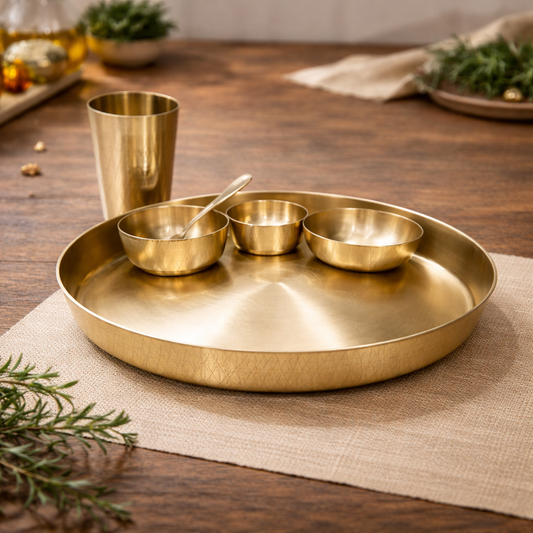
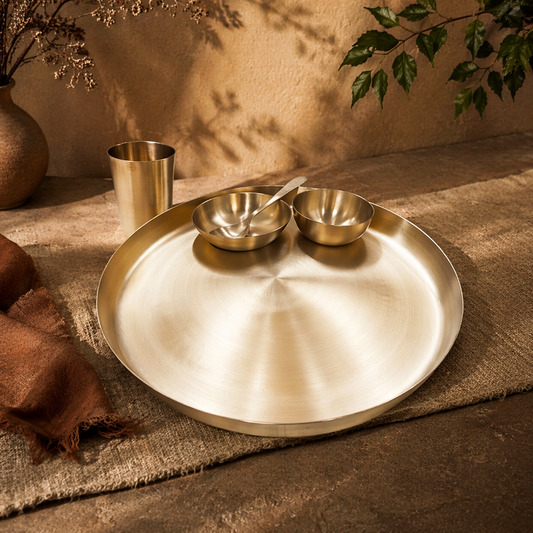
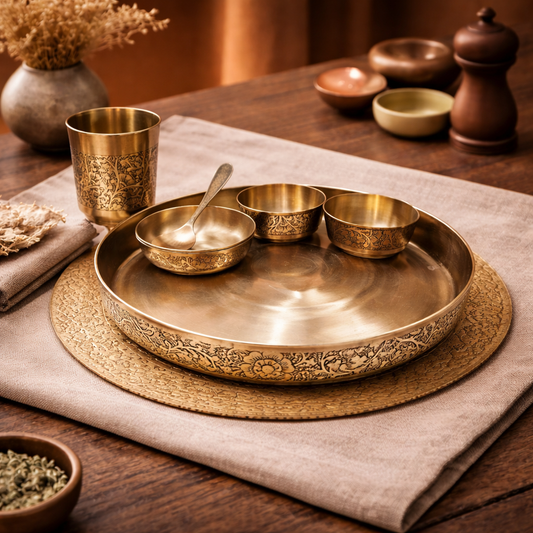
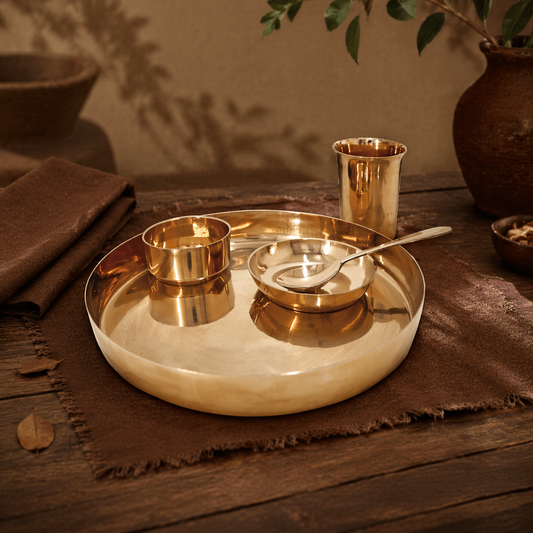
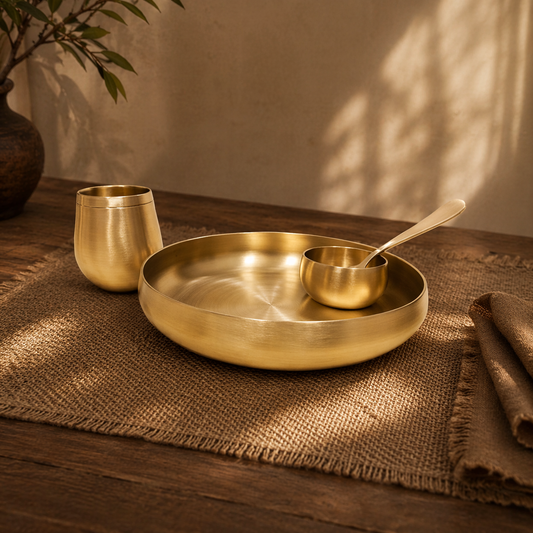
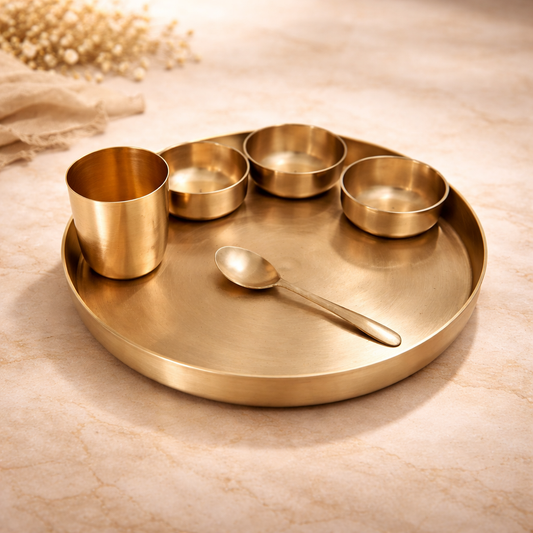
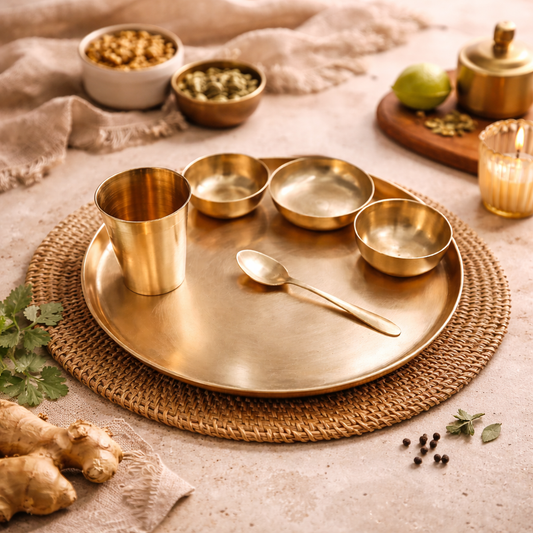
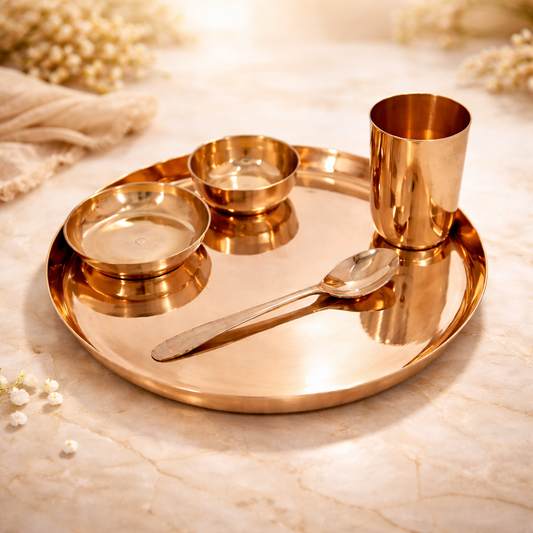
A kansa dinner set does the opposite. The warm golden-bronze hue, the slight variation in finish (especially on hand-crafted pieces), and the way it reflects light differently from steel, commands attention at the table. It says something about the household that chooses it. Guests notice. Meals feel elevated, even if the food is the same.
Over time, kansa develops a natural patina, a depth of character that steel never achieves. Where steel looks the same at year ten as it did at year one, kansa looks lived in in the best possible sense.
Verdict: Kansa, for anyone who treats the table as an extension of their aesthetic sensibility.
Maintenance and Practicality
This is genuinely steel's strongest argument. It requires nothing from you. Dishwasher, rough scrub, left wet in the drying rack, steel absorbs all of it without complaint.
Kansa asks for more. Hand-washing is recommended. Natural cleaning with tamarind or lemon keeps the surface in good condition. It shouldn't be stacked carelessly or left soaking.
None of this is onerous, it takes minutes, but it does require that you approach your kansa thali set with a little intentionality. Some people find this meaningful; others find it inconvenient. Knowing which type you are is useful before you buy.
Verdict: Steel for regular households. Kansyam’s kansa for those who don't mind following a premium lifestyle and can wash with both hands & dishwasher.
Value Over Time
Steel thalis are inexpensive upfront and replaceable easily. They're a commodity.
A kansa thali set is an investment, higher upfront cost, but a piece (or a set) that doesn't need replacing for decades. When you factor in the longevity, the health value, and the fact that a good kansa dinner set can become an heirloom, the per-year cost actually compares favorably over a long horizon.
Verdict: Steel for short-term budget. Kansa for long-term value and meaning.
So, Which Should You Choose?
If you want something that requires zero thought, and costs little, steel is a rational choice. There's no shame in it.
But if you're someone who thinks about what you put into your body, who values the experience of a meal beyond just the calories, who wants their dining table to reflect something considered and intentional, a kansa thali set is genuinely in a different category.
Kansyam's kansa dinner sets, specifically, are worth looking at if purity matters to you. Their 100% lead-free, zinc-free composition means you're not guessing about what's in the alloy, you're getting the real thing, with the antibacterial properties and the clean, warm aesthetic that made kansa the material of choice in Indian homes long before stainless steel ever arrived.
The best argument for kansa isn't nostalgia. It's that once you eat from it, the steel thali starts to feel like settling.
Frequently Asked Questions
1. Is a kansa thali set safe for daily use?
Yes, pure, lead-free and zinc-free kansa thali set is completely safe for everyday use and offers natural antibacterial benefits.
2. Can I eat all types of food in a kansa thali?
Yes, most everyday foods are perfect for kansa thalis. Traditionally, highly acidic foods are not stored in them for long durations.
3. How do I clean and maintain a kansa thali set?
Wash with mild soap, dry thoroughly, and occasionally polish with lemon/tamarind and salt for natural shine. You can also wash Kansyam’s kansa in the dishwasher.
4. What's the difference between kansa, brass, and bronze utensils?
Kansyam’s kansa is made with 99.99% copper bars and tin, brass contains zinc, and bronze compositions can vary. Pure kansa is traditionally preferred for food use.
5. Is a kansa thali set worth the higher price compared to steel?
Yes, kansa lasts for decades, supports wellness due to its antibacterial component, and adds timeless elegance that regular steel utensils can’t match.